







Dr Cagri Tanriover (@Cryptoman)
Practical protection against dust and water (i.e. IP protection)
Recently, I was faced with a challenge to provide IP65 compliance in a product that had to have humidity and pressure sensors on it. The tricky part was to keep the cost of the unit under $15 while meeting this requirement.
Under normal circumstances, one can put all the electronics within an IP65 enclosure that is affordable and readily available off-the-shelf most of the time such as the ones shown in this link. However, given the humidity and the pressure sensor need to be exposed to...
A simple working I2C (TWI) level shifter
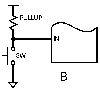
Recently, I had to interface two hardware platforms via an I2C bus (a.k.a. two-wire interface, TWI) to query temperature and real-time clock information. This task is relatively straightforward on the software side. However, because the power supply of the two platforms were different (one at 3.3V and the other at 5V), the I2C busses could not be connected to one another directly and a level shifter was required between them.
There are commercially available I2C level shifters such as...
A Working Real Time Clock (RTC) Implementation
In one of my projects, data captured from various sensors had to be time stamped in the YearYear/DayDay/MonthMonth, HoursHours:MinutesMinutes:SecondsSeconds format. My initial thought was because there was already a GPRS modem in the system, I could simply configure it to use the network time delivered by the base station when it fired up. Once the GPRS module started up and retrieved the correct time, I could then invoke a simple AT command to read the time stamp into the microcontroller....
LCD Control with an MCU
Controlling a liquid crystal display (LCD) to indicate a few ASCII characters should not be a big challenge as a project. That’s exactly what I thought when I decided to include a 2 line by 16 character display in my current project. My initial thought was. “How difficult could it be with all the resources on the internet and my embedded development expertise primarily in telecoms?” Let me tell you it is not as straightforward as I thought it would be and therefore I...
A Useful Current Profiling Method
In one of my recent projects, I had to capture the dynamic current profile of a short-range wireless embedded platform for a number of operation scenarios. Due to the dynamic nature of the current consumption involved, I was unable to use a standard voltmeter for this job. On the time axis, I needed a minimum resolution of 1 millisecond and the accuracy of the current measurement was supposed to be better than 2 mA. This task would be a piece of cake with a Digital Storage...
No Threads Found
Use this form to contact Cryptoman
Before you can contact a member of the *Related Sites:
- You must be logged in (register here)
- You must confirm you email address