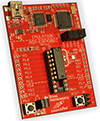







Beginning Microcontrollers with the MSP430 - Tutorial
From the Preface: I decided to write this tutorial after seeing many students struggling with the concepts of programming the MSP430 and being unable to realize their applications and projects. This was not because the MSP430 is hard to program. On the contrary, it adopts many advances in computing that has allowed us to get our application running quicker than ever. However, it is sometimes difficult for students to translate the knowledge they acquired when studying programming for more traditional platforms to embedded systems.

Summary
This hands-on tutorial introduces beginners to programming the TI MSP430 microcontroller, focusing on the hardware-software interface and practical firmware techniques. Readers will learn MSP430 architecture, peripheral usage, low-power features, and step-by-step examples for building and debugging simple embedded applications.
Key Takeaways
- Understand MSP430 architecture, memory map, and register-level programming
- Write bare-metal applications in C (and small assembly snippets) for common tasks
- Configure and use peripherals such as GPIO, timers, ADC, and UART
- Implement low-power modes and basic power-management strategies for battery-powered designs
- Use common MSP430 toolchains and debugging/flash workflows (Code Composer, GCC variants, mspdebug)
Who Should Read This
Students, hobbyists, and early-career embedded engineers who are new to microcontrollers and want a practical introduction to MSP430 firmware and hardware interfacing.
Still RelevantBeginner
Related Documents
- Consistent Overhead Byte Stuffing TimelessIntermediate
- PID Without a PhD TimelessIntermediate
- Introduction to Embedded Systems - A Cyber-Physical Systems Approach Still RelevantIntermediate
- Can an RTOS be really real-time? TimelessAdvanced
- Memory Mapped I/O in C TimelessIntermediate